Liver Transplantation Guide
Comprehensive overview of liver transplant indications, procedures, and post-operative care protocols.
Read more
Understanding the procedure, success rates, and life after kidney transplantation with real-world statistics and medical insights.

Dr. Rajesh Kumar
Renal Transplant Surgeon, 15+ years experience
Living donor transplants have 95% 1-year survival rate
Average 5-year patient survival rate for deceased donor transplants
Approximately 100,000 kidney transplants performed worldwide annually
Over 2 million people worldwide need kidney transplantation
Kidney transplantation is a life-saving procedure for patients with end-stage renal disease (ESRD). As the most commonly performed organ transplant globally, it offers significantly better quality of life and survival rates compared to long-term dialysis. This comprehensive guide provides evidence-based information on kidney transplantation, including eligibility criteria, surgical procedures, outcomes, and post-transplant care.
The first successful kidney transplant was performed in 1954 between identical twins. Today, advancements in immunosuppressive medications have made transplantation possible even between genetically dissimilar individuals.
Chronic Kidney Disease (CKD) affects approximately 850 million people worldwide, with End-Stage Renal Disease (ESRD) requiring dialysis or transplantation affecting 5-10 million individuals. The growing prevalence of diabetes and hypertension has contributed to a steady increase in kidney disease cases globally.
Comprehensive medical evaluation includes blood tests, imaging studies, cardiac assessment, and psychosocial evaluation. Tissue typing (HLA matching) and crossmatching are performed to assess compatibility between donor and recipient.
Donors can be living (related or unrelated) or deceased. Living donors undergo thorough evaluation to ensure their safety and kidney function adequacy.
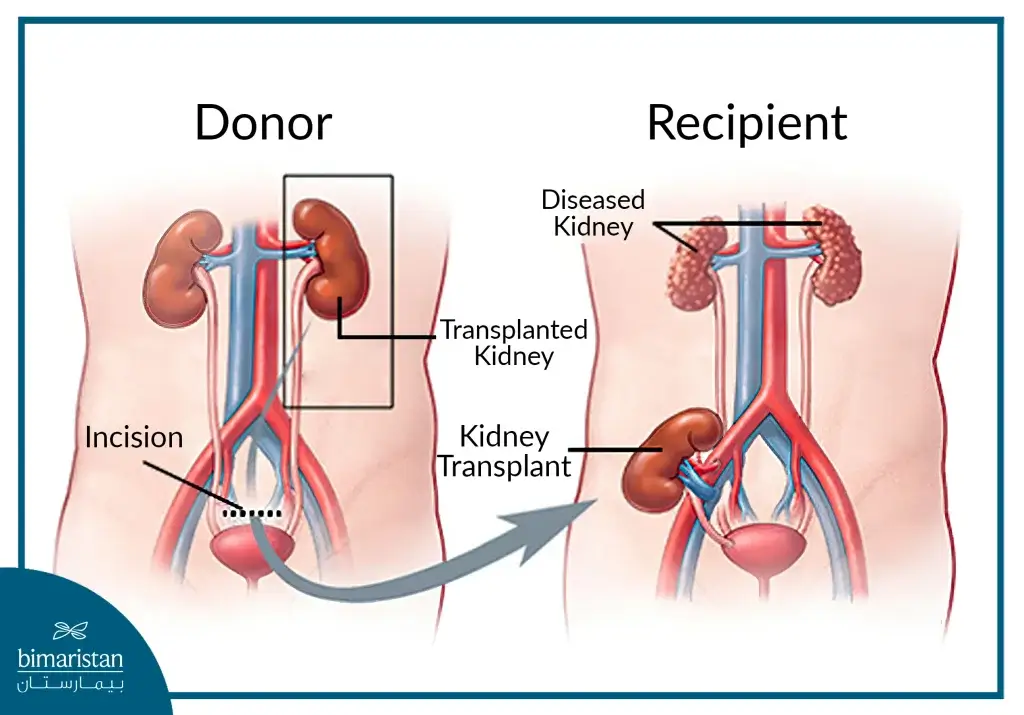
The transplant surgery typically takes 3-4 hours. The donor kidney is placed in the lower abdomen, with connections made to the recipient's blood vessels and bladder. The patient's own kidneys are usually left in place unless they're causing complications.

Immediate post-operative care focuses on monitoring kidney function, managing immunosuppressive medications, and preventing complications. Hospital stay typically lasts 5-7 days for living donor transplants and 7-10 days for deceased donor transplants.
| Transplant Type | 1-Year Graft Survival | 5-Year Graft Survival | 10-Year Graft Survival |
|---|---|---|---|
| Living Related Donor | 97% | 89% | 75% |
| Living Unrelated Donor | 96% | 86% | 71% |
| Deceased Donor (Standard) | 94% | 82% | 65% |
| Deceased Donor (ECD) | 90% | 75% | 55% |
Frequent clinic visits (1-2 times weekly), high-dose immunosuppression, infection monitoring, gradual increase in activity level.
Clinic visits monthly, immunosuppression tapering, return to work for many patients, beginning of routine exercise.
Quarterly visits, stable immunosuppression, focus on preventing long-term complications (cardiovascular disease, cancer).
Annual check-ups, monitoring for chronic allograft nephropathy, continued lifestyle management, potential need for retransplantation planning.
Annual dialysis cost (per patient)
Annual post-transplant care cost
Cost saving with transplantation over 5 years
While the initial cost of transplantation (including evaluation, surgery, and hospitalization) ranges from $100,000 to $300,000 depending on the country and healthcare system, it becomes cost-effective within 2-3 years compared to ongoing dialysis. Many countries have insurance programs or government funding to support transplantation for eligible patients.
Kidney transplantation represents the optimal treatment for most patients with end-stage renal disease, offering superior survival, better quality of life, and long-term cost-effectiveness compared to dialysis. While challenges remain, including organ shortage and the need for lifelong immunosuppression, ongoing advancements in transplantation medicine continue to improve outcomes.
For patients considering transplantation, thorough evaluation by a multidisciplinary team is essential. Increasing living donation through paired exchange programs and improving deceased donation rates through public awareness are crucial strategies to address the growing need for kidney transplants worldwide.
Renal Transplant Surgeon
Dr. Kumar has performed over 1,000 kidney transplants and leads the renal transplantation program at Gods Life Health Care. He has published extensively in transplant medicine journals.
Our transplant specialists are available for personalized consultations and second opinions.
Book Consultation
Comprehensive overview of liver transplant indications, procedures, and post-operative care protocols.
Read more
Prevention, diagnosis, and treatment options for kidney stones with the latest minimally invasive techniques.
Read more
Hemodialysis vs. peritoneal dialysis: Choosing the right option based on lifestyle and medical needs.
Read more
Managing common side effects of transplant medications and strategies for minimizing risks.
Read more